
Why We Rush Towards the Dark
On the strange comfort of seeking darkness in dark times

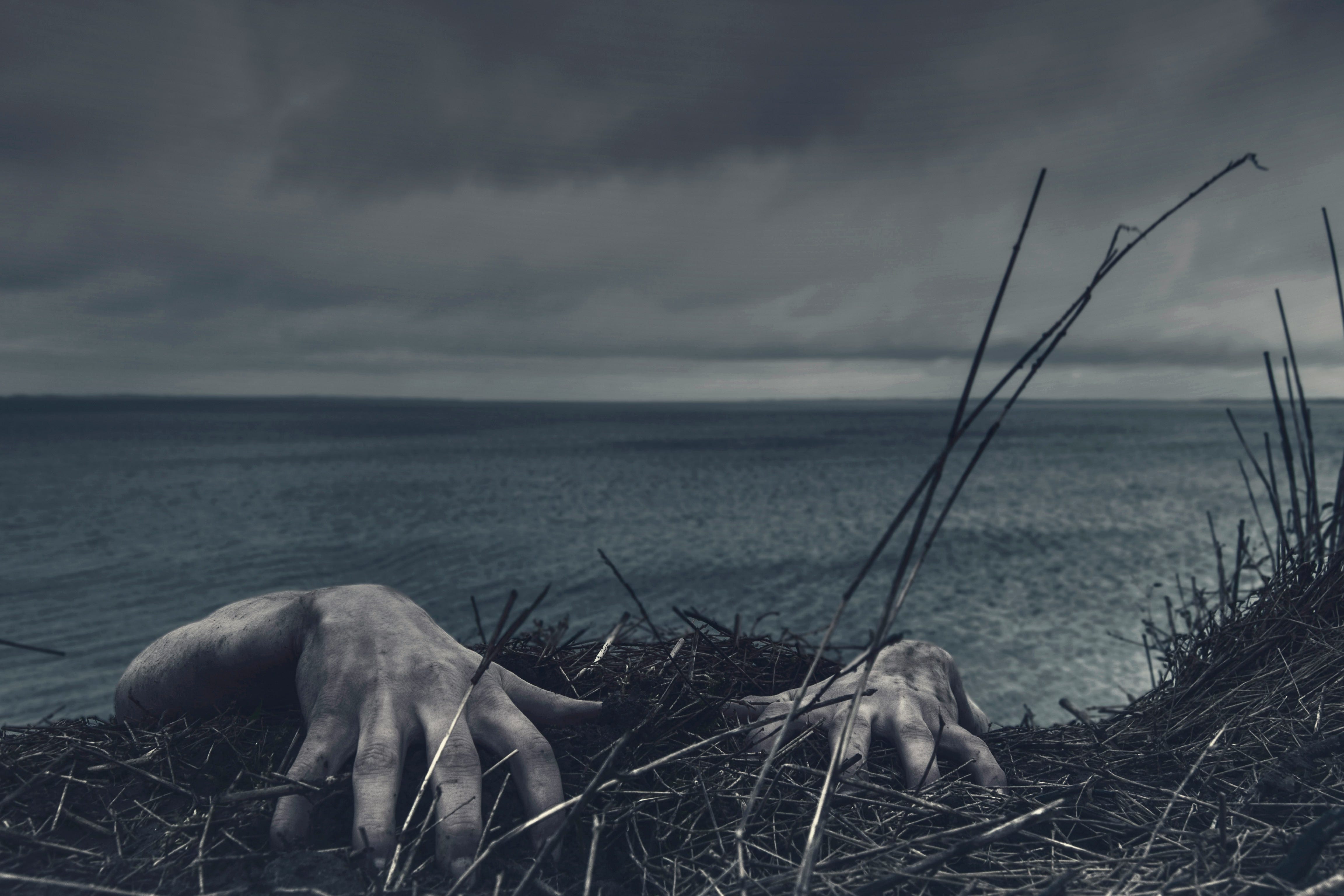
Photo by Daniel Jensen on Unsplash
Spoiler alert: If you haven’t seen Don’t Look Up! (dir. Adam McKay, 2021 ), please be aware that I discuss the ending in this piece.
So the other day a Facebook friend posted about Cormac McCarthy’s Outer Dark. “Unrelentingly bleak,” she wrote. “Truly horrific.”
My immediate reaction was to hunt it down.
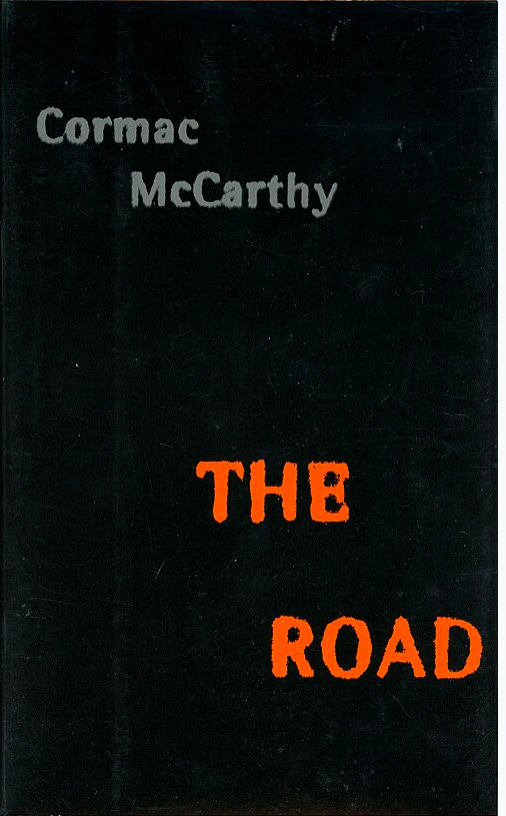
I loved McCarthy’s previous novel The Road. It was like staring into an abyss that stares back. My friend said Outer Dark was worse.
Hoo boy. Gimme gimme gimme.
But then I stopped, a tad concerned at my own impulse. Why did I feel hand-rubbing glee about reading something unrelentingly bleak? I mean, the world is a binfire wrapped in a nightmare. Climate collapse, genocides, AI about to put everyone out of work, literal psychopaths invading countries, #MeToo on an Epstein scale - I mean come on. Surely my instinct should be to reach for escape, for comfort, for something that offers light instead of a mirror?
I’ve spent twenty years studying historical horror - the witch trials, the persecution narratives, the elaborate confessions of women accused of congress with the devil. And I’ve spent nearly as long writing darkness, crafting my own gothic horror, sitting alone in rooms conjuring lighthouses haunted by curses and forests where the dead don’t stay buried. I should understand this impulse better than most.
But it’s only now, sitting in my kitchen, ready to purchase something my friend has explicitly warned me will devastate me, that I think I’ve finally grasped something essential.
To desire horror is to wish for terror with company.
The loneliness of lived horror - the real bleak, the grief that visits at 3am, the dread that sits in your chest when you read the news - is solitary. It isolates. When terrible things happen to us or around us, we often feel utterly alone in our fear.
There’s a particular kind of anguish in feeling that no one else sees what you see, feels what you feel.
But when we read horror, something alchemical happens. The terror becomes objective. It becomes shared. McCarthy’s apocalypse, his blood meridians and outer darks, become spaces we enter together. Every person who has turned those pages has walked that same devastated landscape. We are no longer alone in the wasteland.
The Shape of Fear
There’s something else, too. Something about form.
Real horror is formless. It sprawls. It has no narrative arc, no structure, no satisfying third act. When terrible things happen in life, they simply happen - meaningless, chaotic, refusing to resolve into sense. We’re left holding fragments, asking why into a void that offers no answer.
But a novel - even the bleakest novel - can give horror a shape. A beginning, a middle, an end. I’m not interested in gratification. I’ve had to stop reading several novels because of how they depicted abuse. I’m talking about the kind of writing that weighs darkness carefully, without glorying in it, and with raw empathy. In fact, research suggests that dark narratives are more appealing to empaths. Horror fans are overflowing with cognitive empathy, using horror and historical darkness as ways to understand and rehearse responses to the worst of human experience from a position of safety.
In The Road, McCarthy’s devastation isn’t random; it’s crafted. Every sentence is deliberate. Every image is chosen. And in that shaping, the meaningless becomes meaningful. The unbearable becomes, somehow, beautiful. This is not a betrayal of suffering. It’s a redemption of it.
In the preface to Night Shift, Stephen King describes horror fiction as “a basket loosely packed with phobias; when the writer passes you by, you take one of his imaginary horrors out of the basket and put one of your real ones in – at least for a time.” But I’d push further than this exchange model suggests. It isn’t merely that we swap our fears for fictional ones. It’s that fiction gives our fears architecture. A story is a house we can walk through, examining terror room by room, knowing there’s a door at the end.
Simulation, Not Catharsis
The psychological literature on horror has long leaned on catharsis - the Aristotelian notion that we purge our negative emotions through fictional experience. But this has always struck me as too simple, too mechanical. It flattens what feels like a deeply complex evolutionary process into something resembling emotional plumbing.
More compelling is what researchers like Mathias Clasen call “threat simulation theory.” Horror, in this framework, functions as something our ancestors would have recognised: practice. When we immerse ourselves in fictional danger, we’re not purging fear - we’re training with it. We’re running simulations of catastrophe, testing our emotional responses, building a repertoire of coping strategies we might never need but are better for having rehearsed.
The evidence for this is striking. During the COVID-19 pandemic, researchers at Aarhus University found that fans of horror films exhibited greater psychological resilience than non-fans. Those who regularly consumed apocalyptic, zombie, and disaster fiction reported being more prepared and less psychologically distressed. They’d been practising, in a sense, for years - running mental fire drills for catastrophes they’d only imagined, until the unimaginable actually arrived.
This reframes everything. We’re not wallowing in darkness. We’re not indulging some morbid or pathological fascination. We’re doing something our species has always done: preparing for the worst by imagining it first. Horror fiction is a cultural technology, ancient and adaptive, that allows us to expand our emotional and behavioural repertoire without paying the cost of actual trauma.
The Writer in the Dark
But what of those of us who make the horror? What drives a person to sit alone, day after day, constructing nightmares?
King, when asked why he writes horror, gave an answer that has stayed with me: “Writers write about their obsessions.” He traces his own to childhood - the first movie he ever saw was Bambi, and when that deer was caught in the forest fire, he was both terrified and exhilarated. There it is: terror and exhilaration, bound together from the beginning.
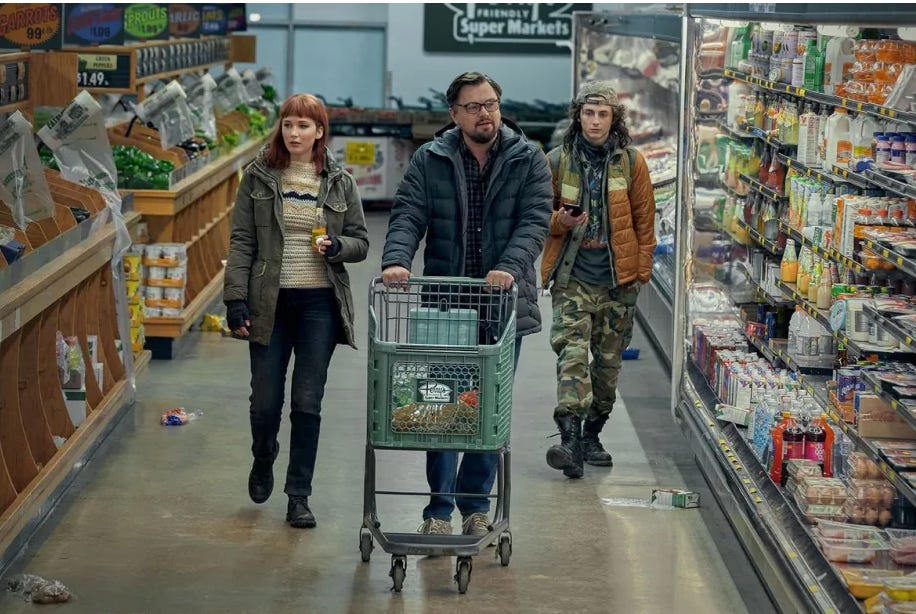
A still from Adam McKay’s Don’t Look Up!
I recognise this. I write novels that are brimming with trauma and darkness. When I write my dark tales, I’m not trying to frighten readers so much as I’m trying to understand fear - to map its contours, to trace its logic, to see it clearly enough that it loses some of its power over me. The act of writing darkness is, in some sense, an act of mastery. You take the formless dread that lives in the corners of your mind and you shape it. You give it a name, a face, a narrative arc. And in doing so, you gain a measure of control you never had over the real terrors that inspired it.
There’s also this: when I write darkness, I’m creating that space of company. I’m building a room where readers can come and feel their fears with me.
Every novel I’ve written has been, at its heart, an invitation: Come. Let’s sit together in the dark, face down our fears. You won’t be alone.
The Fire We Gather Around
This is why humans have always gathered to tell dark tales. Long before novels, we sat around fires and spoke of monsters, of curses, of the dead who wouldn’t stay buried. We shaped our terrors into tales.
I think often of the witch trial confessions I’ve studied - those elaborate narratives of midnight flights and diabolic pacts, of storms raised and children cursed. Whatever we believe about how those confessions were extracted, the stories themselves reveal something about the human need to narrate horror. The accused didn’t simply say “I did evil.” They told stories with structure, with detail, with a terrible poetry. Agnes Sampson meeting the Devil at North Berwick Kirk. Isobel Gowdie flying through the night as a jackdaw, reciting her incantations in verse. The horror was given form - and in that form, it could be witnessed, shared, and perhaps even endured.
These weren’t bedtime stories. They were often extracted under torture, used to condemn women to death. But they persist because they gave shape to the shapeless anxieties of their time - fears of female power, of nature’s unpredictability, of the devil that walked among us wearing familiar faces. The stories survived because stories are how we survive.
It reminds me of the ending of Adam McKay’s dark comedy/political satire Don’t Look Up! The premise of the film is that a huge meteor is on a collision course with earth, and the scientists who spot it find their efforts to warn the rest of the planet about imminent destruction met with exactly the kinds of disbelief and Trump-level absurdity that you’d expect here in 2026. For such a hilarious film, the ending is sweet, but not saccharine. The main characters gather round a table with their nearest and dearest and enjoy a good dinner while they wait for the meteor to hit. No one is crying. No one is pretending that the meteor isn’t going to hit, either. They enjoy the roast chicken, savour the coffee. Thank each other for being there. We see their demise - the realness that has been too real, hyper-real, false news for most of the world comes crashing through the dining room. But the sentiment is there. Even in the face of planetary destruction, there’s nothing like good company to make the darkest of dark a little easier.
The Relief of Meaning
So I will buy Outer Dark. I will read it, and it will likely devastate me. And maybe I will be grateful for that devastation, because it will be meaningful devastation - horror transformed by craft into something I can hold, examine, and ultimately survive.
Because here is the deepest comfort horror offers: even at its most nihilistic, a story insists that suffering can be shaped. That terror can be witnessed. That the worst things imaginable can be rendered with precision and even beauty. When McCarthy writes his blood-soaked prose, he’s not just depicting darkness - he’s proving that darkness can be seen, can be spoken, can be made into something that others will recognise.
And that recognition is everything. To read horror is to discover that the void inside you has been mapped by someone else. To write it is to do the mapping yourself, leaving coordinates for those who come after.
When I write, I am remembering that the only thing guaranteed in life is death. I don’t get depressed about it. I just like to hold the fact of it in my mind. And sometimes it’s a useful thing to remember. It puts a lot of stuff into the right order.
The thing that meant the most to me about The Road, by the way, was not the horror or the bleakness - that was simply a frame by which to understand the love at the heart of that story, the love of a parent for his child, demonstrated by trying to raise a child in a nightmare world and get him, against all odds, to safety. The world is always cruel, that novel says to me. But love survives.
We are a species that survives by story. When the world is too much, we do not look away - we look through, through the lens of narrative. And in doing so, we find we are never quite as alone as we feared.
Horror is not a mirror. It’s a new light for the old dark.
I’m curious. What's the darkest book you've ever read?
The darkest book I’ve ever written (in my opinion) is A Haunting in the Arctic. The Last Witch, my new novel, is pretty dark too. If you like that sort of thing.
Very insightful. Why are humans drawn to the darkness? I think you've covered how it somehow makes us confront the things we would rather not see. That makes us stronger and more resilient. The darkest book I've read is Matheson's I am Legend. The reader follows the life of one man who is trying to survive and destroy the vampires who are attacking him. Eventually he realises that he is the last human, the survivor, the legend breaking into homes and killing the occupants. As the reader I realised I had been rooting for a serial killer, had accepted his reasoning, was urging him onwards. Sometimes we need to look beyond what we see. This is what horror shows us.
...this is why I love ghost stories. Turning a ghost/pain/fear into a story/narrative gives it a rhythm/form that I can engage with.