
Why Ghost Stories Don't Need Ghosts
On atmosphere, unseen menace, and why the ghost is the least frightening thing in the room

I’ve got some online writing workshops coming up that you might be interested in: click below for details!
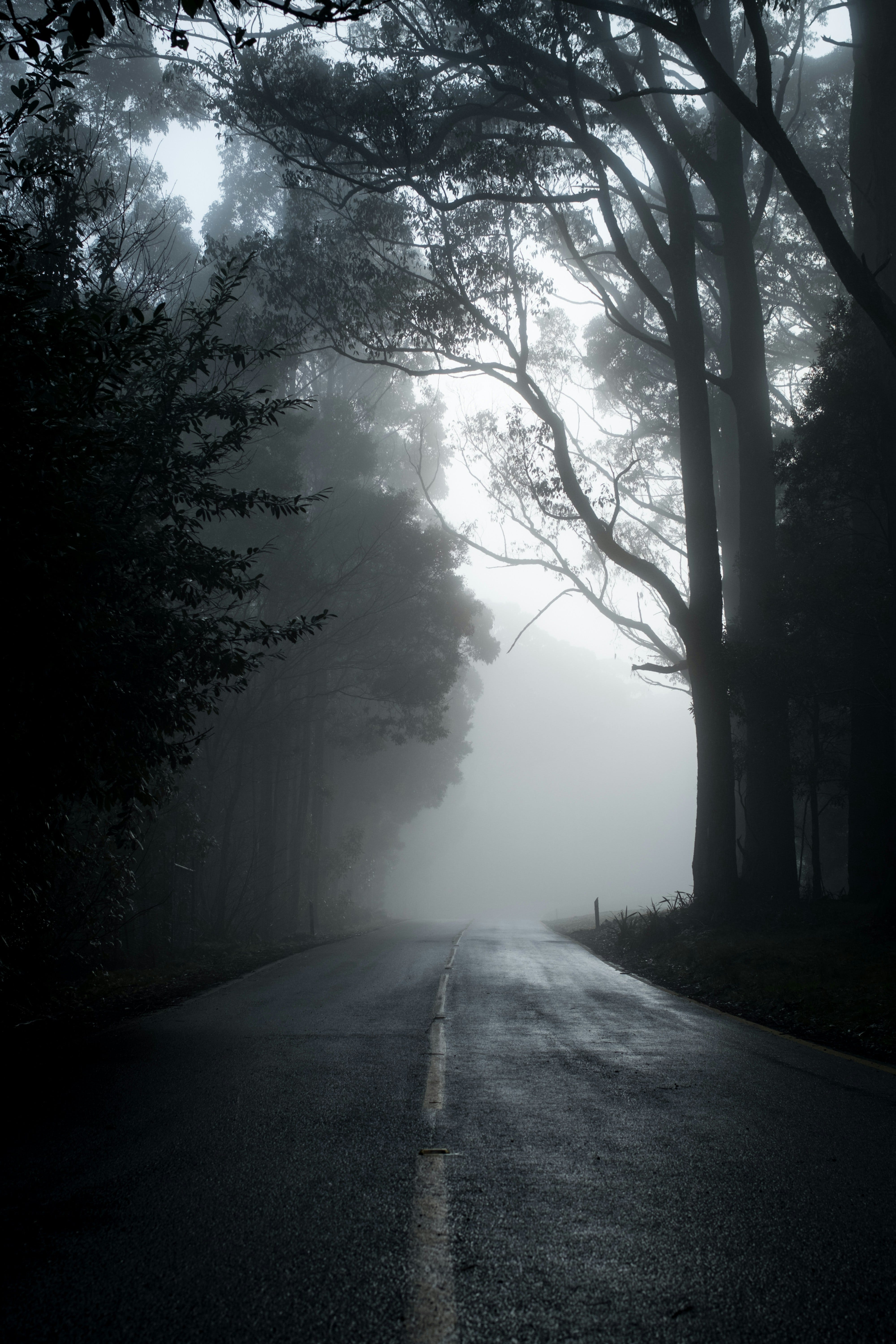
Photo by Michael Mouritz on Unsplash
Here is a wee heresy to start your weekend: the ghost is not the antagonist of a ghost story.
I know, it sounds bonkers. But think about the ghost stories that have genuinely wormed their way into your brain forever. For me, one of them is The Others with Nicole Kidman. It wasn’t actually the ghost that scared me (iykyk). It was the atmosphere of the house, the dread, and probably the room full of sheet-covered mannequins.
So the argument at the heart of every ghost story workshop I teach is that atmosphere is important. And it’s not the setting of a ghost story, or the mood or vibe or a bit of fog. Atmosphere is directly linked to the antagonist. The ghost, when it finally comes, is secondary. It’s just the face of the atmosphere, if you like. The embodiment of it.
The house doesn’t contain the villain. The house behaves like one.
I’ll refer back to the books from last week’s list for a bit of context here.
Hill House is oppressive from its glorious first paragraph, and note that this is before Eleanor arrives, and before anything knocks or writes on walls. Shirley Jackson tells us immediately that the house is not sane, and everything that follows is the house acting on that: the doors that shut by themselves, the architecture of the building that is a bit wonky, the cold that has a specific location and a preference. The haunting is Hill House.
In Mariana Enriquez’s “Adela’s House,” the frightening thing is a door. In Cassandra Khaw’s Nothing But Blackened Teeth, the mansion’s hostility is fully established - in the rot, the dark, the wrongness of the proportions - long before the bride smiles out of it. In The Little Stranger, you can read the entire novel without ever settling on whether there’s a ghost at all, and it makes no difference to the dread, because Hundreds Hall itself has been the pressure on every page.
Strip the apparitions out of these books and they remain frightening. Strip the atmosphere out and the apparitions become mere costumes, like white sheets over a mannequin (still not over that scene obvs).
Atmosphere is behaviour
Here is where some ghost stories go wrong, and I say this with big love, having read a great many of them: writers treat atmosphere as description. Fog, cobwebs, a crow, a creaking gate, adjectives all over the place. The result is a story that looks haunted but doesn’t feel it.
Atmosphere becomes an antagonist the moment it behaves. The test I give my workshop students is this: could you swap your setting’s details into an estate agent’s listing without changing anything? If so, your atmosphere is decorative. To make it act, it needs the three things any antagonist needs:
It needs appetite. The sense that the place, the weather, the silence wants something. Hill House wants Eleanor specifically. Khaw’s mansion is hungry in the most literal sense. Even Eel Marsh House, in The Woman in Black, wants its grief acknowledged, and punishes the town until it is.
It needs intention: a pattern to its behaviour, so the reader starts to feel they’re being toyed with rather than merely spooked. Random creaks are noise. A creak that comes only when the character has just relaxed is intelligence.
And it needs response: it must react to the characters. This is the one that I think is easy to miss, the feedback loop that exists between an environment and the people inside it. An atmosphere that ignores the protagonist is scenery, because it’s passive. Create an atmosphere that notices them, adjusts to them, tests them, and you make it a character in its own right. Maybe the temperature in the room drops when she says his name. Or the house finally settles once she has decided to leave.
Do this, and something wild happens to the revision process: “add more atmosphere” becomes about action. What does the house do in this scene? What does it want here? How does it answer what my character just did? Now, you’re not thinking about fog but writing an antagonist who happens to be made of it.
The reader’s body knows first
One last thing: I think fear arrives in the body before it arrives in the mind. The prickle at the neck, the reluctance to look at the window, the sense of being watched. The best ghost story writers exploit this by registering atmosphere through their characters’ bodies rather than their thoughts. Not she felt afraid but the held breath, the refusal to turn around, the hand that won’t reach for the light switch. The character’s body is the instrument on which the atmosphere plays, and the reader’s body plays along.
This is why restraint is better than revelation - the M.R. James principle. What his scholar glimpses on that Suffolk beach is barely described at all, and it has frightened readers for a hundred and twenty years, because James understood that the antagonist was never the thing itself. It was the dread that had been gathering around it for 30+ pages.
Come and build one!
If this is the kind of thing you want to spend two hours doing - building a haunted space, object or presence of your own, and learning to make it behave - this is precisely the work of my workshop, An Introduction to Haunting: Writing Ghost Stories. It’s suitable for all levels, from the ghost-curious to writers deep in a haunted draft, and no prior experience is needed: just a willingness to put pen to paper and see what arrives.
What a great post! So useful and fascinating, thanks for sharing
Yes yes yes. Thank you for sharing this. Now I'm in the mood for a good ghost story.